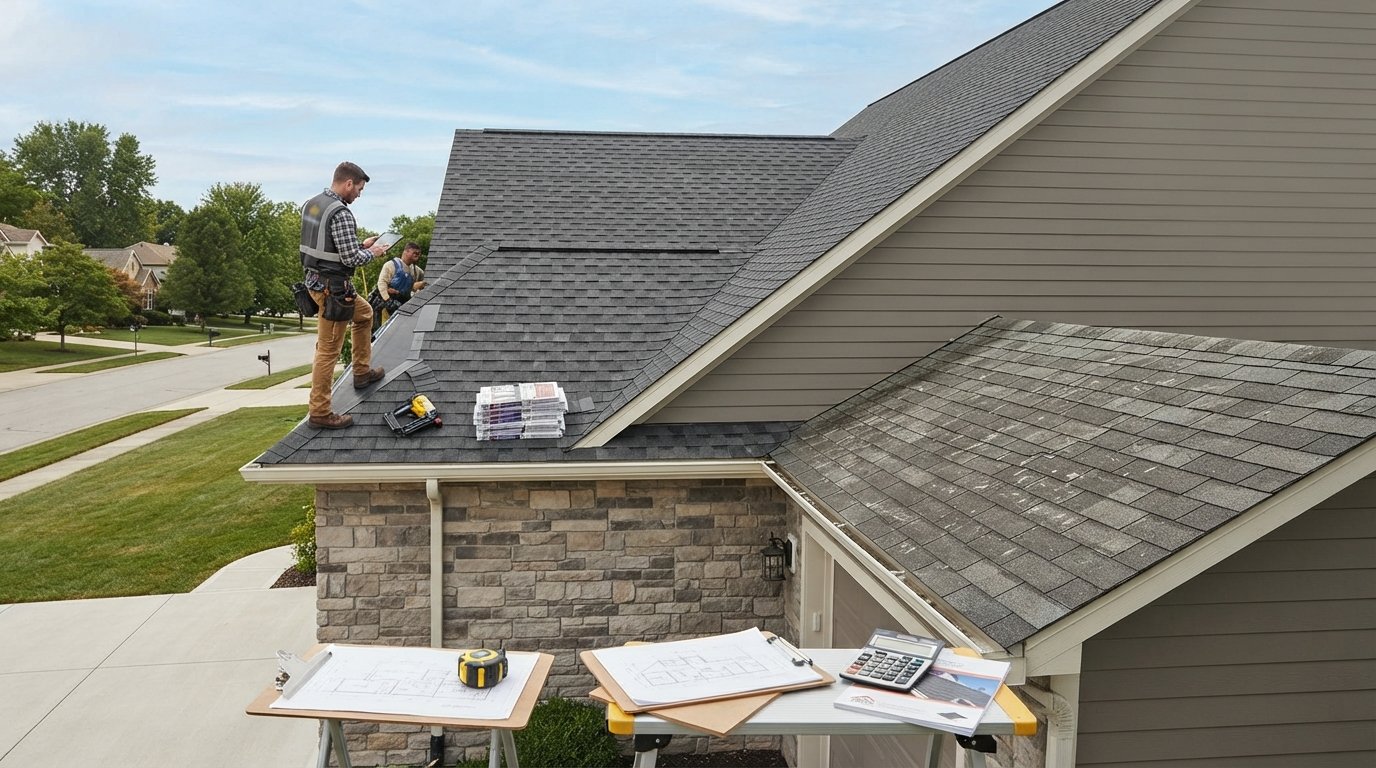
Replacing a roof is one of the most expensive home improvement projects a homeowner may face. The final price can range from several thousand dollars for a basic asphalt roof to tens of thousands for premium materials such as metal, tile, or natural slate.
In 2026, a typical residential roof replacement with architectural asphalt shingles generally costs around $9,000 to $18,000, although the actual price can be considerably lower or higher depending on roof size, location, material, labor rates, roof pitch, existing damage, and the complexity of the structure. Current cost guides place many standard asphalt replacements in this general range. (EnergyPros)
Understanding what drives the price is critical before requesting contractor estimates. A quote that looks inexpensive may exclude important work such as old-roof removal, decking repairs, flashing, ventilation, permits, or cleanup.
Average Cost of a New Roof in 2026
For a typical home, the following ranges provide a useful starting point:
| Roofing Material | Typical Installed Cost | Approximate Lifespan |
|---|---|---|
| 3-Tab Asphalt Shingles | $5,500-$12,000 | 15-20 years |
| Architectural Shingles | $7,000-$16,000 | 25-30 years |
| Premium Asphalt Shingles | $14,000-$24,000 | 30+ years |
| Metal Roofing | $12,000-$40,000+ | 40-70 years |
| Wood Shakes | $12,000-$28,000 | 25-30 years |
| Concrete or Clay Tile | $16,000-$36,000+ | 40-100 years |
| Synthetic Slate | $18,000-$30,000 | 40-60 years |
| Natural Slate | $30,000-$70,000+ | 75-150+ years |
These are broad national estimates rather than guaranteed prices. Roof size, installation complexity, regional labor costs, material quality, and structural repairs can move the final price substantially. (EnergyPros)
How Roofers Calculate the Cost
Roofing contractors commonly price roofing by the square rather than simply by the home’s floor area.
One roofing square equals 100 square feet of roof surface.
For example, a roof with 2,000 square feet of actual roofing surface contains approximately 20 squares.
This distinction matters because a 2,000-square-foot house does not necessarily have a 2,000-square-foot roof. Roof pitch, overhangs, dormers, valleys, and other architectural features can increase the actual roof area.
A 2026 cost guide estimates that architectural asphalt shingles can cost approximately $450 to $800 per roofing square installed for a standard replacement, although local pricing can vary considerably. (CostToUpgrade)
Cost of a New Roof by Material
Asphalt Shingles
Asphalt shingles remain one of the most common residential roofing materials because they offer a relatively low upfront cost and straightforward installation.
Basic 3-tab shingles can cost roughly $5,500 to $12,000 for a typical replacement, while architectural shingles generally cost more but provide a more dimensional appearance and longer expected service life. (HomeGuide)
Best for: Homeowners looking for an affordable and widely available roofing option.
Metal Roofing
Metal roofing has a significantly higher initial cost than standard asphalt shingles, but it can offer a much longer service life.
Depending on the metal type and installation method, a metal roof can cost approximately $12,000 to $40,000 or more. Standing-seam systems are generally more expensive than basic corrugated metal roofing. (HomeGuide)
Best for: Homeowners prioritizing durability and long-term performance.
Tile Roofing
Clay and concrete tile can provide excellent durability and a distinctive appearance, but the material is heavier and usually more expensive to install.
A tile roof can cost approximately $16,000 to $36,000 or more, depending on the material, roof structure, design, and labor. (ProjectPrice)
Best for: Homes where the structure can support the additional weight and where long-term durability is a priority.
Slate Roofing
Natural slate is one of the most expensive roofing materials. It can last for decades or even more than a century when properly installed and maintained.
The cost can range from approximately $30,000 to $70,000 or more depending on the roof and material selected. (HomeGuide)
Best for: Premium homes where longevity and appearance justify a substantial upfront investment.
What Factors Affect New Roof Cost?
The material is only one part of the equation. Several other factors can significantly change your final estimate.
1. Roof Size
Larger roofs require more materials, labor, underlayment, flashing, and disposal.
A small single-story home can cost substantially less to reroof than a large multi-story property.
2. Roof Pitch
Steep roofs require additional safety equipment, slower installation, and more experienced labor.
Complex or steep roof designs can therefore cost substantially more than a simple low-slope roof. (Jack Gray’s Roof Observations)
3. Roof Design
A basic rectangular roof is generally easier to replace than a roof containing multiple valleys, dormers, skylights, chimneys, and other penetrations.
More complicated designs increase installation time and the amount of flashing and specialized work required.
4. Existing Roof Removal
If the existing roofing material needs to be removed, the contractor has to account for labor, disposal, and transportation.
Some projects may involve multiple layers of existing roofing, which can increase removal costs and may require additional work before the new roof is installed.
5. Roof Decking Damage
Once the old roofing material is removed, contractors may discover damaged or rotted decking.
Replacing damaged decking adds to the project’s cost. This is one reason homeowners should be cautious about accepting an unusually low estimate that does not explain how potential decking repairs are handled.
6. Flashing and Ventilation
Roofing systems involve more than shingles or panels.
Important components can include:
- Underlayment
- Drip edge
- Flashing
- Ridge vents
- Soffit ventilation
- Pipe boots
- Ice and water protection where applicable
- Fasteners
- Sealants
A professional estimate should explain what is included rather than simply giving you a single total price.
7. Labor Costs
Labor rates vary considerably by location and contractor.
Highly experienced roofing contractors may charge more, but choosing the cheapest contractor is not automatically the best financial decision. Poor installation can lead to leaks, premature deterioration, and expensive repairs.
Roof Replacement Cost by House Size
The size of the house provides only a rough starting point because the actual roof area depends on its design.
For illustration, a typical asphalt roof might fall into ranges such as:
| Approximate Home Size | Potential Roof Replacement Range |
|---|---|
| 1,000 sq. ft. | $5,000-$10,000+ |
| 1,500 sq. ft. | $7,000-$14,000+ |
| 2,000 sq. ft. | $9,000-$18,000+ |
| 2,500 sq. ft. | $11,000-$22,000+ |
| 3,000 sq. ft. | $13,000-$26,000+ |
These figures are planning estimates, not contractor quotes. A steep or complicated roof can cost significantly more than a simple roof of the same approximate size.
How Much Does Roof Labor Cost?
Labor can represent a substantial portion of the total roof replacement price.
One 2026 cost analysis places roofing labor around $1.50 to $3 per square foot for standard installation, with specialized materials requiring significantly more labor. (HomeGuide)
Labor costs can increase when:
- The roof is steep
- Access to the property is difficult
- The home has multiple stories
- The roof has several levels
- The existing roof requires extensive removal
- Decking requires replacement
- Specialized materials are used
- Local building requirements increase installation work
Roof Replacement vs. Roof Repair
Not every roofing problem requires a complete replacement.
A repair may be appropriate when the damage is isolated and the rest of the roof remains in good condition.
Replacement may make more sense when:
- The roof is near the end of its expected lifespan
- Shingles are extensively damaged
- There are repeated leaks
- The decking is deteriorating
- There is widespread water damage
- Large sections of the roof are failing
- Previous repairs have become frequent and expensive
If the roof is relatively young and the damage is limited, replacing the entire system may be unnecessary.
How to Save Money on a New Roof
A lower price should not be the only objective. The goal is to reduce unnecessary costs without sacrificing installation quality.
Get Multiple Estimates
Request estimates from at least three qualified roofing contractors.
Make sure each contractor is pricing the same scope of work. Otherwise, comparing totals is meaningless.
Compare the Scope, Not Just the Price
A proper estimate should identify:
- Roofing material
- Manufacturer and product line
- Number of layers being removed
- Underlayment
- Flashing
- Ventilation
- Drip edge
- Decking allowance
- Disposal
- Cleanup
- Permits
- Workmanship warranty
Current roofing guidance specifically recommends comparing bids by scope and warranty rather than simply choosing the lowest total. (ShingleScience)
Choose Materials Carefully
The most expensive roofing material is not necessarily the best choice for your home.
Consider the material’s:
- Initial cost
- Expected lifespan
- Maintenance requirements
- Weather resistance
- Warranty
- Energy performance
- Installation requirements
Ask About Financing
Some contractors and lenders offer financing for major home improvement projects. Compare the interest rate, fees, repayment period, and total cost before accepting financing.
Do not let a low monthly payment hide an expensive long-term loan.
What Should Be Included in a Roofing Estimate?
A professional roofing estimate should be detailed enough for you to understand exactly what you are paying for.
Look for separate information about:
- Existing roof removal
- Disposal
- Roof decking repairs
- Underlayment
- New roofing material
- Flashing
- Ventilation
- Labor
- Permits
- Cleanup
- Warranty
If one contractor gives you a $10,000 quote and another gives you a $15,000 quote, do not assume the first contractor is automatically cheaper.
The $10,000 estimate may exclude $3,000 worth of work included in the second estimate.
Warning Signs of a Bad Roofing Estimate
Be cautious when a contractor:
- Refuses to provide a written estimate
- Demands a large upfront payment
- Gives an unusually low quote without explanation
- Cannot provide proof of insurance
- Avoids explaining the warranty
- Pressures you to sign immediately
- Refuses to identify the roofing material
- Provides vague descriptions of the work
A legitimate contractor should be willing to explain the scope, materials, timeline, payment schedule, and warranty.
Frequently Asked Questions
What is the average cost of a new roof in 2026?
For a typical residential property, an asphalt roof replacement commonly falls somewhere around $7,000 to $18,000, with architectural-shingle projects often landing around $9,000 to $16,000. Actual costs depend heavily on roof size, location, materials, labor, and complexity. (EnergyPros)
What is the cheapest roofing material?
Basic asphalt shingles are generally among the least expensive mainstream residential roofing options. They have a lower initial cost than metal, tile, and natural slate.
How long does a new asphalt roof last?
Standard asphalt shingles commonly have an expected lifespan of roughly 15 to 30 years, depending on the product, installation quality, climate, maintenance, and environmental exposure. (This Old House)
Is a metal roof worth the extra cost?
It can be. Metal roofing generally costs more upfront but can last substantially longer than asphalt shingles. Whether the investment makes sense depends on your budget, climate, expected ownership period, and the specific metal roofing system.
How do I know whether I need a new roof?
Look for widespread shingle deterioration, recurring leaks, damaged flashing, sagging, extensive water damage, or a roof approaching the end of its expected lifespan. A qualified roofing professional should inspect the roof before you make a replacement decision.
Can homeowners finance a new roof?
Yes. Depending on your circumstances, financing may be available through roofing contractors, home improvement lenders, personal loans, home equity products, or other financing options. Compare the APR and total repayment cost rather than focusing only on the monthly payment.
Final Verdict
The cost of a new roof in 2026 depends on far more than the square footage of your house. Material selection, roof pitch, design complexity, labor, tear-off, decking condition, ventilation, flashing, permits, and local market conditions can all change the final bill.
For many homeowners, architectural asphalt shingles offer a reasonable balance between upfront cost, appearance, and durability. Metal, tile, and slate can make sense when long-term durability or a particular architectural style justifies the higher investment.
Before signing a contract, get several detailed estimates and compare them line by line. Do not choose a contractor simply because the initial price is the lowest. A properly installed roof with clearly defined materials, workmanship, and warranty terms can save you far more money than a cheap installation that fails prematurely.
Leave a Reply